One hour, online, first week of October. It is a working session on the role that most engineers in India and the Gulf have not yet heard named, and that a growing number of AI companies are hiring for right now.
This is not an introduction to AI. It assumes you can already write code. It is about one specific job, what it demands, and what you would need to show to be taken seriously for it.
What a forward deployed engineer is, in one paragraph
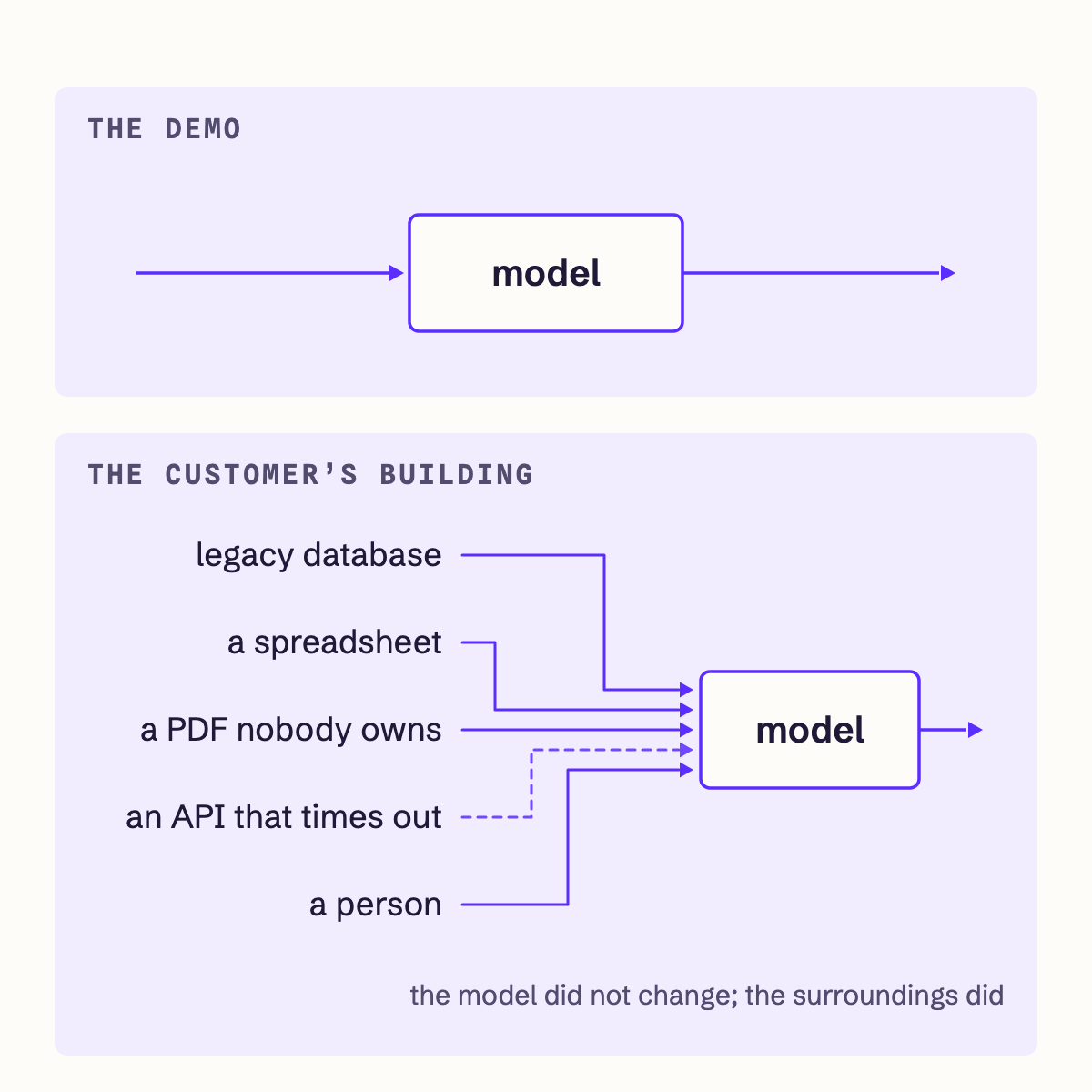
A forward deployed engineer, usually shortened to FDE, is a software engineer who works alongside the customer while the software is being made to work inside the customer's own systems. Not a salesperson with an engineer in tow. Not a support engineer answering tickets after launch. An engineer who writes the code, sees the real data, finds out why the thing that worked in the demo does not work in the warehouse, and fixes it there.
The title came out of Palantir. Shyam Sankar, now Palantir's chief technology officer, created it. It has spread across companies selling AI to other companies for one simple reason: the software works in the lab, and then it meets somebody's actual data.
The level this session is pitched at
Most explanations of this role are written by people who have not done it. This one is built on the accounts of people who have, and it goes straight to the specifics.
Het Trivedi at Baseten published his own week broken down: 75 percent software engineering and model optimisation, 15 percent technical consulting, 10 percent customer relationship. He describes the role as a technical co-founder for the customer's AI project. Colin Jarvis, who leads forward deployed engineering globally at OpenAI, says his engineers are with customers between 50 and 80 percent of the time. Jia Wu, who leads deployed engineering at Cognition, makes the sharpest point of the three: now that generating code is cheap, writing code faster is only 20 percent of the problem.
Four numbers, three practitioners, and they already contradict most of what is said about this role online. The hour is spent on what they mean for your next two years, not on repeating them.
What the hour covers
What the work actually is, hour by hour. Not the job-description version. The version where you learn how much of the week is engineering, how much is sitting with a customer, and how much is neither.
Where the role sits between engineering and everything else. This is where the consultant objection lives. We take it seriously rather than waving it away, because the honest answer is the interesting part: it turns on what you leave behind when you go.
What the market looks like from India and the Gulf. Which companies are hiring, what the postings say, and the part the postings do not say. Specific, and careful to separate what the evidence supports from what people assume.
What to build, starting the week after. The most useful thing you can do is not a certificate. It is one piece of work a hiring manager can open and run. We describe what makes one convincing rather than decorative, and how long it honestly takes.
Time at the end for questions, and they get real answers rather than deflections.
Who is speaking
Practitioners, not commentators. The bar for this session is people who have shipped into somebody else's systems and can say precisely what broke. Names and backgrounds are published on this page as each is confirmed, ahead of the date.
Who this is for
Engineers already working, in India or the GCC, who can read and write code and want to point their next few years at AI work that is not a research job.
Students in their final year or just out, in India or the GCC, who have heard the title and cannot tell whether it is worth chasing.
Anyone who has been quoted a large number by a training company this year and wants a second opinion before paying it.
If you have never written code, this hour will be honest with you rather than encouraging. The role is an engineering role first.
What it costs, and what we want from you
Nothing, and nothing.
There is no fee and no card is asked for. There is no course behind it, no cohort, no upsell on the last slide, and no recruiting funnel: we are not collecting resumes and nobody on the panel is there to screen you. We will not promise you a job, an interview, or a referral, because we cannot honestly promise those and neither can anyone who says they can.
That is stated once. The reason to attend is the hour itself.
How to join
Registration opens shortly and the link appears in this section. The date within that first week of October, and the time chosen to work across both India and the Gulf, are published here as they are fixed. This page is the place to come back to.
Start before October
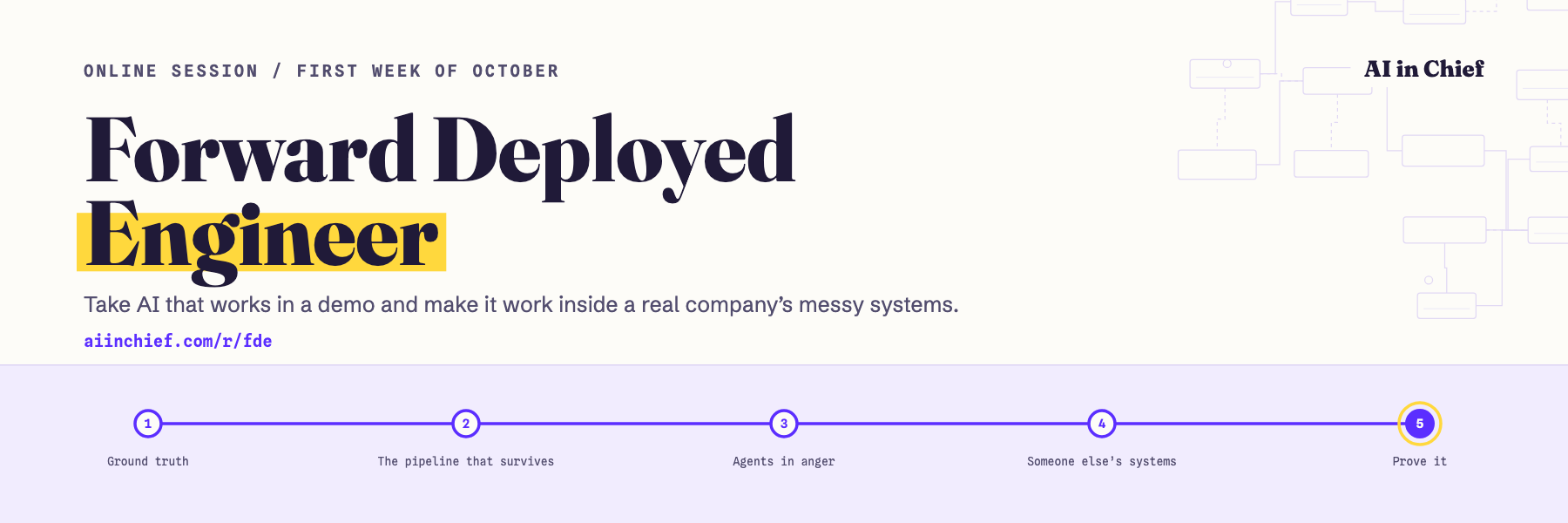
You do not need to wait. The forward deployed engineer road is already live and runs in five stages: understanding what the job actually is, building a retrieval pipeline that survives bad data (the plumbing that finds the right documents and hands them to a model before it answers), giving that pipeline hands and watching what it breaks, deploying into a codebase you did not write, and finishing with one portfolio piece that reads as evidence rather than homework.
The session is a companion to that road, not a prerequisite for it. Anyone arriving in October having already walked a stage or two will get considerably more out of the hour.
Start at stage one today: aiinchief.com/r/fde