The two numbers everyone is quoting, said correctly
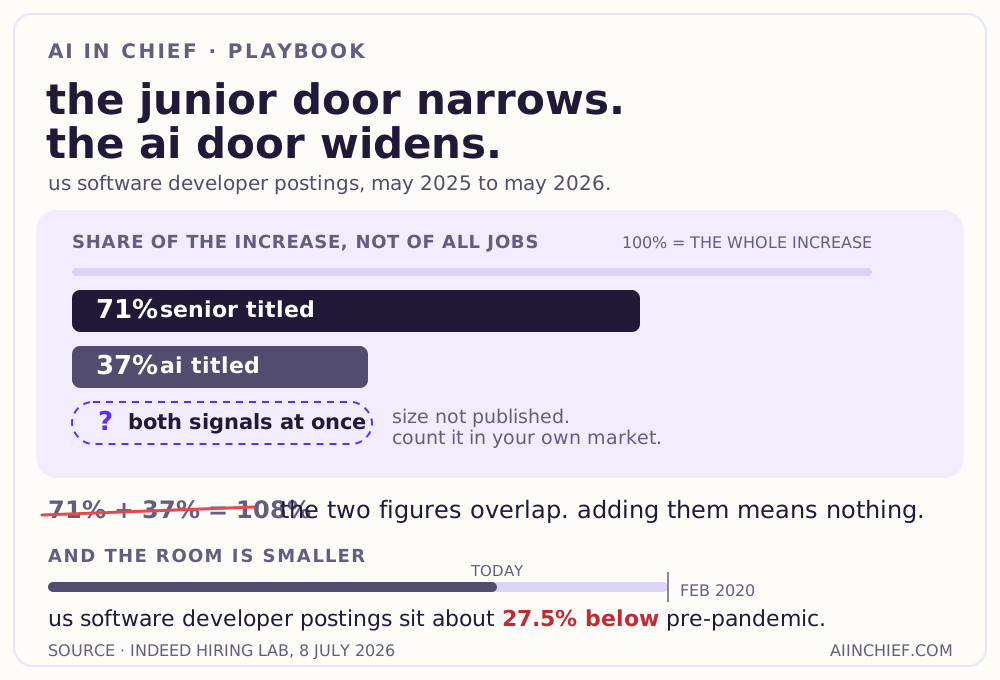
Indeed's Hiring Lab looked at US software developer postings between May 2025 and May 2026 and asked a narrow question: where did the growth come from? Two figures came out of it. Seventy one percent of the increase came from senior titled roles. Thirty seven percent of the increase came from roles that mention AI in the title.
Read that twice, because it is misread constantly. These are shares of the increase, not shares of jobs. Nobody measured that 71% of software roles are senior, and saying so would be wrong. What was measured is the composition of the growth, which is a smaller claim and a more useful one. The two figures also overlap, because one posting can be senior titled and AI titled at the same time. Adding them together produces a number that means nothing. If you ever see 108% quoted from this study, someone has done arithmetic on figures that were never meant to be added.
What the pair does tell you is the shape of the opening. Where postings grew, the growth leaned senior, and a large slice of it carried AI in the title. That is a shape. It is not a verdict on any one person's chances, including yours.
The half of this story that is less fun to print
The same Hiring Lab piece carries a figure that gets quoted far less often, and we are not going to leave it out. US software developer postings remain about 27.5% below their pre-pandemic level, measured against February 2020.
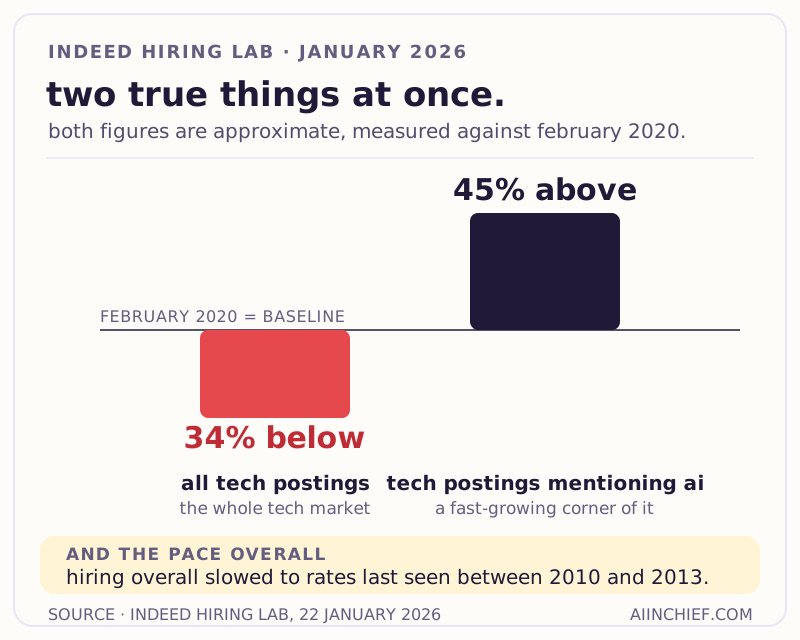
Sit with that, because it changes what the growth means. Growth on a base that is roughly a quarter smaller than it was six years ago is real growth, but it is recovery inside a smaller room. The January 2026 Hiring Lab update said something similar from another direction: total tech postings sat about 34% below pre-pandemic levels even while tech postings mentioning AI ran about 45% above February 2020. Hiring activity overall had slowed to rates last seen between 2010 and 2013.
So the honest summary takes two sentences, not one. The door is narrower than it was. Inside that narrower door, a specific kind of posting is growing.
Anyone who gives you only the first half is selling despair. Anyone who gives you only the second half is selling something else. We would rather hand you both numbers and let you do your own arithmetic, because that is the whole point of a free school.
The AI door is widening, and it is still a small door
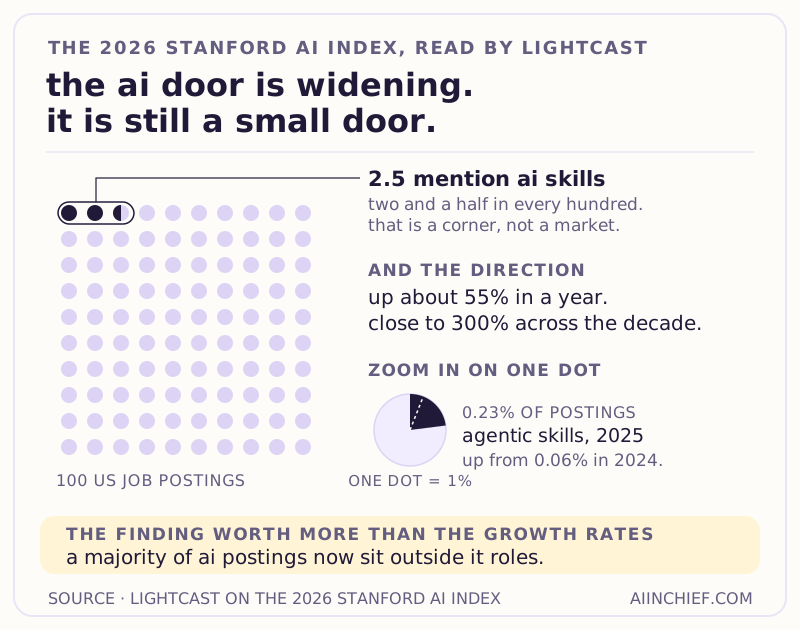
The 2026 Stanford AI Index, as read by Lightcast in April 2026, put AI skill mentions at 2.5% of US job postings. Say that number plainly before doing anything with it: two and a half postings in every hundred. That is small. It is not a labour market that has been remade. It is a corner of one.
The interesting part is the direction and the speed. That 2.5% is up about 55% in a year and close to 300% across the decade. Skills tied to agentic AI moved from 0.06% of postings in 2024 to 0.23% in 2025, a rise of more than 280%. Note those years carefully, because they get misdated: the agentic jump described there runs from 2024 to 2025, not from this year. Even after tripling, agentic skills sit under a quarter of one percent of postings, which works out to somewhere near ninety thousand postings across the US.
One more finding is worth more than all the growth rates put together. A majority of AI job postings now sit outside IT roles. The demand is spreading sideways into operations, finance, marketing, healthcare and the public sector, which is exactly where a working professional with a decade of domain knowledge already lives.
Why the seam is the aiming point
Here we stop reporting and start reasoning, and we will label it clearly.
Opinion, and only opinion: we think the overlap between senior titled and AI titled postings is the most reachable target on the board for an upskiller who is changing careers rather than starting one.
The reasoning goes like this. A senior title on a conventional posting usually means tenure, and tenure is the one thing a career changer cannot manufacture. A senior title on an AI titled posting is often asking for something else: judgment about an unfamiliar system, the ability to own an outcome nobody has a playbook for, and the willingness to say what a model should not be trusted with. Almost nobody has ten years of agent orchestration behind them, because the work is not ten years old. In that gap, demonstrated judgment can stand where tenure normally stands.
A caution belongs with that, and it is not decorative. None of the sources above shows that AI caused the contraction in junior hiring. They are correlational. Interest rates, the end of a hiring boom, offshoring and ordinary business cycles all sit in the same period. When you read a confident causal story about AI eating entry level work, you are reading an argument, not a finding, and you should treat ours the same way.
The count nobody can do for you
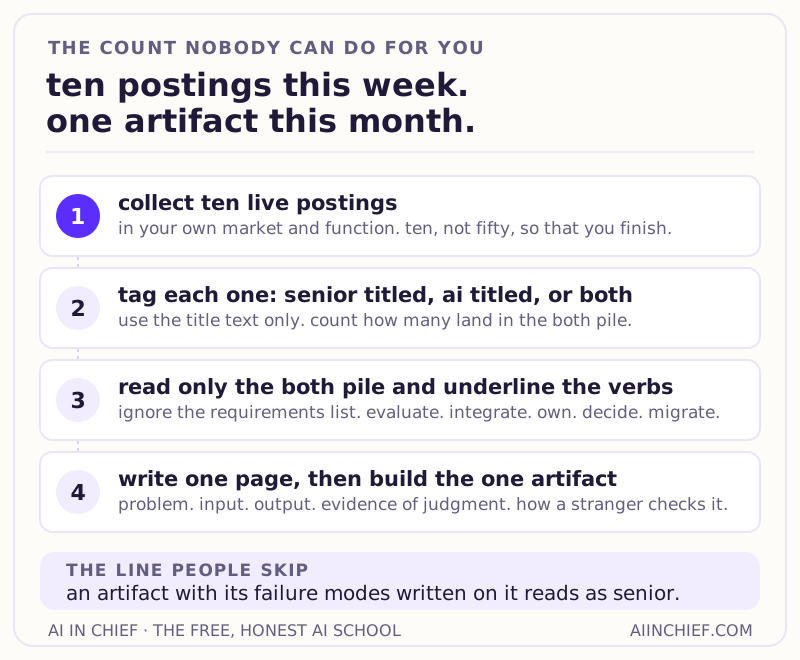
We have not run this exercise on your market, and we are not going to invent a result and print it as evidence. A number we made up would be worthless, and a number you collect in your own city, in your own function, this week, beats any continental average.
So collect it. Open the boards you would actually apply through, in India, the USA, the UAE, or wherever you are hunting. Take ten live postings, not fifty. Ten is enough to see a pattern and few enough that you will finish.
Tag each posting three ways. Senior titled, meaning the title carries senior, lead, staff, principal or the local equivalent. AI titled, meaning AI, machine learning, LLM, agent or similar appears in the title itself, not merely in the body. And both, for the ones that carry each signal at once. Keep a note of how many fall in the third bucket, because that count is your local version of the national picture, and it may not match it at all. That is useful information either way.
Then read only the both pile, slowly. Ignore the requirements list, which is usually copied between postings. Read the responsibilities and underline the verbs. Evaluate. Integrate. Own. Decide. Migrate. Those verbs are the job.
From the overlap to one artifact spec
The output of the count is not a spreadsheet. It is one page, and it describes one thing you will build this month.
Write the spec with five lines. The problem, stated as the repeated verbs from your both pile, in a domain you already know. The input, meaning the real data or documents the thing consumes. The output, meaning what a person receives and acts on. The evidence of judgment, meaning the place where you decided something an off the shelf tool would have got wrong, and wrote down why. And the check, meaning how a stranger opening it can tell in two minutes that it works.
That last line is the one people skip, and it is the one that carries the seniority signal. A working artifact with an honest note about where it fails reads as senior. A polished demo with no failure mode reads as a tutorial. The seam rewards the first kind.
Build the one artifact. Not five. One, finished, opened by a stranger, with its limits written on it.